

Shoulder of Giants
In our inaugural Castelnau report last year, we referred to the debt that we owed to some giants of the business and investment world whose shoulders we metaphorically stand on. Giants such as Messrs Rales, Singleton, Barber and Leonard whose values and methods continue to teach us so much.
One giant that went unnamed in that report was Jeff Bezos, a businessman who many rightfully laud to be among the best business leaders of the recent era.
Amazon's wide moat, 28 years after its launch, remains in no small part a result of Bezos' obsession with prioritising what seems a very simple business proposition — keeping customers happy.
Putting the customer first has become a trite expression these days — yet it is the linchpin of some of the widest business moats.
Bezos was on Two Others' Shoulders!
In an effort to understand this customer centricity concept properly, it seems important to realise that Bezos was not its true pioneer, nor was the man who introduced him to the concept in 2001. Rather the true pioneer was that man's boss and predecessor — Mr Sol Price [1916–2009] founder of Costco and its predecessor Fed-Mart.
As the dust sheet of Price's 2012 biography rightly says, Price was “arguably the most creative mind in twentieth century retailing”. As evidence of the man's genius, his values live-on in the business that he first opened in 1954 and in the impenetrable moat that surrounds Costco to this day.
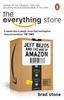
In 2001, seven years into Amazon's corporate life (and 40 years into Costco's), Bezos met with Jim Sinegal (then Sol Price's successor) in a Seattle Starbucks cafe. Brad Stone's Everything Store book recounts Sinegal's advice to Bezos that day:
“My approach has always been that value trumps everything. The reason people are prepared to come to our strange places to shop is that we have value. We deliver on that value constantly. There are no annuities in this business.”Jim Sinegal
The story goes that by the following Monday Bezos cut prices on all books, CDs and videos by 20–30%. Urban legend or not, the gist of it seems spot-on. Most observers can also now see with hindsight the strong similarity between Amazon Prime and Costco membership and the deep influence that Costco had on Amazon's strategy.
So, can we understand a little better the how of Price's steadfast obsession with delighting his customers? Indeed it is the very steadfastness that really interests us — how to make it last. It might be easy (ish) to delight a customer for a year. But can you keep doing it for six decades. It's the duration of something that really creates value.
The Golden Rule
Charlie Munger is approaching his 25th year as a board member of Costco and regularly refers to the company's unmatched excellence during interviews and meetings. If one pays close attention to Munger's comments on Costco, what is interesting is that Munger tends to emphasise the quality of the company's ethics more so than its strategy. That nuance might seem quaint but actually it is incredibly profound and absolutely pertinent to Costco's success. Costco's success is almost entirely derived from the values imbued by its founder.
In short, Sol Price's values represented The Golden Rule — that is: “treat others like you would like to be treated yourself”. It sounds glib to some but in reality it is possibly the most profound insight into humanity. And Sol Price showed that it works in business too. Treat customers well, consistently, and they will reciprocate with their loyalty.
Robert Price, Sol's son, wrote in his biography, “whereas most retailers saw customers as adversaries, bodies to be sold to, Price saw the world differently. He felt he was on the customers' side. He felt his job as a retailer was to become the customers' greatest friend and in return pledge his loyalty back”.
Retailer as Fiduciary
Maintaining this attitude to people requires a truly authentic value system and so it is useful to realise that Price married two key value systems in his approach to business: ethics and law.
Price, a trained lawyer, saw himself as a fiduciary working on behalf of his customer with “a duty to be very, very honest”. Using the fiduciary model seems an extremely creative way of thinking. Nowadays most people's idea of being a fiduciary is of being a burden, the cost of being an agent. Price saw it as a virtue, and end in itself. When you think about Price and his business strategy in this light, it shows why such strategies are so hard to emulate and why Price's integrity and virtue remains so valuable and sought-after in the business world.
Robert Price, again in his biography of his father Sol, wrote: “Sol's experience as an attorney representing clients, and his own moral code, became a foundational feature of the FedMart business. Sol described his business approach as the professional fiduciary relationship between us (the retailer) and the member (the customer). We felt we were representing the customer. You had a duty to be very, very honest and fair with them and so we avoided sales and advertising. We have in effect said that the best advertising is by our members…the unsolicited testimonial of the satisfied customer. This fiduciary relationship with the customer was similar to the Golden Rule; the way Sol put it — if you want to be successful in retail, just put yourself in the place of a cranky, demanding customer. In other words, see your business through the eyes of the customer.”
It's About Humanity
Integrity is not something that can be formed or evaluated by an algorithm. It is a purely human initiative. So for fun we turned to an AI bot to see what it had to say on the matter. We asked ChatGPT “what is the best way to measure customer delight”. Sure enough, it gave us a pitch perfect answer, guaranteed to get someone through their business studies year 2 exams. It is a great demonstration of the ‘simple, but not easy aspect' of all of this. Of course we can look to NPS, Trustpilot rankings and the like to inform us, but ultimately a true customer-first approach requires an unwavering human empathy behind it.
what is the best way to measure customer delight?
There are several ways to measure customer delight, including:
- Net Promoter Score (NPS): This measures customer loyalty and is based on the question, “On a scale of 0-10, how likely are you to recommend our company to a friend or colleague?”
- Customer Satisfaction (CSAT): This measures how satisfied customers are with a specific interaction or experience. It can be measured through surveys asking customers to rate their satisfaction on a scale.
- Customer Effort Score (CES): This measures how much effort a customer had to put in to get a problem solved. It can be measured through surveys asking customers to rate their effort on a scale.
- Customer Retention: This measures the percentage of customers that continue to do business with a company over time.
- Repeat Business: This measures the percentage of customers that come back to make a repeat purchase.
- Referral Rate: This measures the percentage of customers that refer others to the business.
It's important to note that, having multiple metrics to measure customer delight can give a more comprehensive view of the customer experience.
Source: Chat GPT
The Customer Contract
Munger once told an interviewer that Costco had one big advantage over Amazon — Costco was trusted more. In effect, Costco has a form of implied ‘Customer Contract' in place between it and its customers (members). This is perhaps analogous to the social contract said to exist between governments and their citizens. Costco members trust that they will always get the best value from a Costco warehouse.
This is why the famous Costco ‘$1.50 for an in-store hot dog and soda' saga (unchanged in price since 1995) is so important — it symbolises the contract. Were it to change, it would signify a break in the contract. This explains the seemingly ridiculous lengths the company goes to to maintain the proposition. We are all familiar with funny anecdotes of Costco executives discovering a new price reduction in some obscure product and trying to keep it as margin rather than passing on the saving to the member. Invariably every such anecdote end with some form of “over my dead body” response from the manager! It is in the constant resisting of such slippage that Costco differentiates itself from almost every other customer-centric business on the planet. 99.9% of companies would keep just a little of those savings for themselves and thus the rot creeps in.
Obliquity
The mantra that Price (and later Sinegal and later still Craig Jelinek) all cited unwaveringly was focus on the Customer, then employees and then shareholders — in that order. Such obliquity also requires trust from shareholders too. Anyone watching Jeff Bezos' first decade as CEO will appreciate the uncertainty of the approach. It was not obvious at the time but Bezos was investing heavily in delighting his customers through a myriad of convenience, availability and delivery services. The pay-off — the moat — would not be obvious to most until many, many years later.
Whether it's the $1.50 hot dog or the £1.59 pint of Ruddles, whilst they seem irrational actions, these are external signals from customer-centric businesses to their customers that all is well — that they, the customer remains king (and queen).
For the last word we turn to an aforementioned Giant: Mark Leonard. Leonard inverts our idea and cleverly uses happy and loyal customers as a sign of good management.
“this largely dodges your question about management attributes. I despair of answers that are some version of ‘intelligent, energetic, ethical'. I know some great business builders who didn't win the genetic lottery in the intelligence category but compensated with hard work and determination. Energy can be poorly channelled. Ethics seem to get pretty plastic under enough carrot and stick stress. I'd rather use a track record of consistently happy and loyal customers and employees to judge a team. This strikes me as a far better predictor of future performance than psychometric questionnaires or dowsing for cultural fit”Mark Leonard